What is the Difference Between Smartwatch and Fitness Tracker
Wearable technology has become increasingly popular among people who want to stay connected, monitor daily activities, and maintain a more active lifestyle. Two of the most common wearable devices are smartwatches and fitness trackers. Although they may look similar and share several features, they are designed with different priorities.
If you are planning to buy a wearable device, understanding what is the difference between smartwatch and fitness tracker can help you choose the right option for your lifestyle, needs, and budget.
What is a Smartwatch
A smartwatch is a wearable smart device that combines traditional watch functions with many smartphone-like features. Depending on the model, a smartwatch may allow you to receive notifications, answer calls, control music, use GPS, track workouts, monitor wellness metrics, set reminders, and access different apps or tools directly from your wrist.
Modern smartwatches commonly offer features such as:
- Bluetooth calling
- Call and message notifications
- Heart rate and SpO2 tracking
- Sleep monitoring
- Multiple sports modes
- GPS or connected GPS
- Music control
- Weather updates
- Alarms and reminders
- Customizable watch faces
Some advanced 4G smartwatches also support SIM or eSIM connectivity, allowing certain functions to work without keeping a smartphone constantly connected.
What is a Fitness Tracker
A fitness tracker, sometimes called an activity tracker or fitness band, is primarily designed to monitor physical activity and wellness-related information.
Fitness trackers usually have a smaller and lighter design than smartwatches. Their primary purpose is to continuously record activities such as steps, workouts, calories burned, distance, heart rate, and sleep.
Because they generally have fewer smart features and smaller displays, many fitness trackers can also provide longer battery life.
Smartwatch vs Fitness Tracker: Key Differences
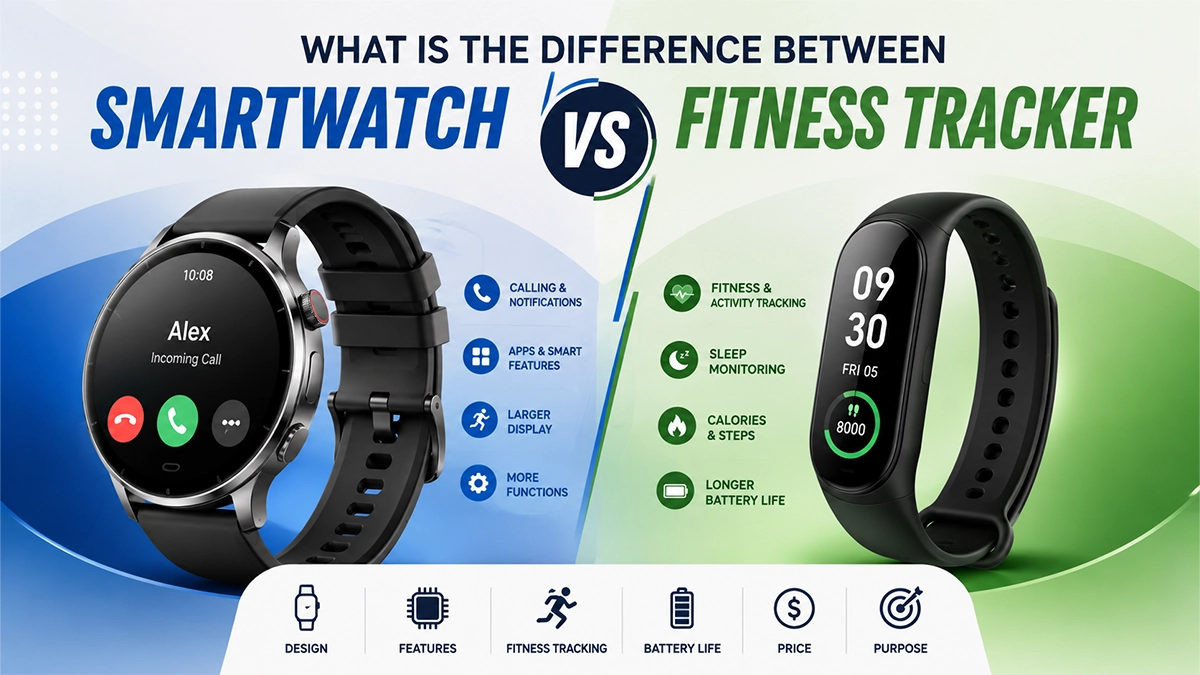
| Feature | Smartwatch | Fitness Tracker |
|---|---|---|
| Main Purpose | Connectivity + fitness + lifestyle | Fitness & activity tracking |
| Display | Usually larger | Usually smaller |
| Calling | Available on many models | Limited or unavailable |
| Notifications | Advanced | Usually basic |
| Fitness Tracking | Yes | Yes |
| Health/Wellness Tracking | Available | Major focus |
| GPS | Common on selected models | Available on selected models |
| Apps & Smart Features | More extensive | Limited |
| Battery Life | Varies by features and usage | Often longer |
| Design | Fashion & technology focused | Lightweight & sporty |
| Price | Usually higher | Usually more affordable |
1. Smart Features and Connectivity
The biggest difference between a smartwatch and fitness tracker is connectivity and functionality.
A smartwatch is designed to become an extension of your smartphone. Many models can display incoming calls, messages, social media alerts, and app notifications. Bluetooth-calling models can even allow users to answer calls from their wrist.
Fitness trackers generally focus more on activity information and provide fewer communication features.
2. Fitness and Activity Tracking
Both devices can track everyday activities, but fitness tracking is the primary purpose of a fitness tracker.
Depending on the device, both categories may monitor steps, calories, distance, heart rate, workouts, sleep, and SpO2.
More advanced smartwatches can combine these features with GPS, detailed sports modes, and additional workout information.
Remember that consumer wearable health measurements are primarily intended for wellness tracking unless the manufacturer specifically states that a feature has relevant medical certification.
3. Display and Design
Smartwatches usually have larger displays and more premium designs. Many modern models feature AMOLED displays, Always-On Display, customizable watch faces, and interchangeable straps.
Fitness trackers generally have slimmer screens and lightweight bands. This makes them comfortable for continuous activity and sleep tracking.
If appearance and screen experience are important to you, a smartwatch may be the better choice.
4. Battery Life
Fitness trackers often have an advantage when it comes to battery life because they typically use smaller displays and run fewer power-intensive features.
Smartwatch battery life varies considerably. Features such as Bluetooth calling, GPS, Wi-Fi, 4G connectivity, Always-On Display, and frequent activity tracking can increase power consumption.
Therefore, actual battery performance depends heavily on the model and usage pattern.
5. Price Difference
Fitness trackers are generally more affordable because they focus on essential activity-tracking features.
Smartwatches range from budget models to premium devices. Their prices depend on display technology, build quality, GPS, calling capabilities, operating system, sensors, connectivity, and other features.
Smartwatch or Fitness Tracker: Which Should You Buy?
Choose a smartwatch if you want a complete wearable experience with calling, notifications, fitness tracking, larger display, customizable watch faces, and additional smart features.
Choose a fitness tracker if your main priorities are activity monitoring, lightweight design, simplicity, longer battery life, and affordability.
For example, a professional who wants to manage calls and notifications while tracking daily activity may prefer a smartwatch. Someone who mainly wants to count steps, record workouts, and monitor sleep may find a fitness tracker more practical.
Final Thoughts
So, what is the difference between smartwatch and fitness tracker? The main difference comes down to purpose. A fitness tracker primarily focuses on activity and wellness monitoring, while a smartwatch combines many of those tracking features with broader communication, productivity, and lifestyle functions.
Neither is automatically better. The right choice depends on your daily needs, preferred features, smartphone compatibility, battery expectations, design preference, and budget.